
Compost has long been recognized as one of the most effective organic soil amendments. When properly processed, it can be used not only in home gardens but also in large-scale agriculture as a reliable fertilizer source. Understanding how to use compost as fertilizer helps farmers and fertilizer producers unlock more value from organic waste while improving soil health.
What Makes Compost Suitable for Fertilizer Use?
Compost is produced through the controlled decomposition of organic materials such as animal manure, crop residues, food waste, and green waste. During composting, microorganisms break down complex organic matter into stable humus rich in nutrients.
Well-matured compost contains balanced organic nutrients, beneficial microbes, and improved carbon content. This makes it suitable for use as organic compost fertilizer, bio organic fertilizer, or a base material for further fertilizer processing.
However, raw compost is not always ready for direct application. Moisture content, particle size, and nutrient consistency must be managed carefully, especially for commercial use.
Common Ways to Apply Compost as Fertilizer
There are several practical ways to use compost fertilizer depending on farming needs:
-
Direct soil application: Compost is spread evenly over farmland and incorporated into the soil to improve structure and nutrient retention.
-
Base fertilizer for crops: Compost can be applied before planting to support long-term nutrient release.
-
Raw material for organic fertilizer products: Compost can be processed into powder or granules for easier transportation and standardized application.
For commercial producers, converting compost into a market-ready product usually requires a complete compost fertilizer production line. Feel free to consult YUSHUNXIN!
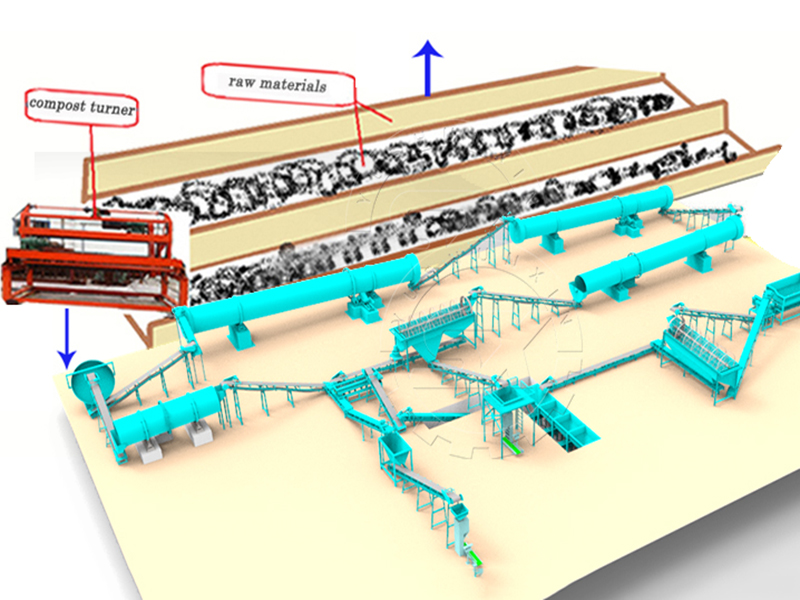
compost fertilizer production line
How Compost Is Processed in Fertilizer Production Lines
In industrial settings, compost is transformed into value-added fertilizer through a series of steps. A typical compost-based fertilizer production line includes crushing, screening, mixing, granulation, drying, cooling, and packaging.
Granulation is especially important when producing granular compost fertilizer, as it improves appearance, handling efficiency, and nutrient uniformity. Depending on capacity and material characteristics, disc granulators, drum granulators, or roller press systems may be used.
This approach allows producers to turn compost into standardized organic fertilizer pellets or powder products suitable for large-scale distribution.
Why Compost-Based Fertilizer Is Gaining Attention
As agriculture shifts toward sustainability, compost fertilizer is increasingly used to replace or supplement chemical fertilizers. It supports soil microbial activity, improves water retention, and reduces nutrient runoff.
For fertilizer manufacturers, compost offers a low-cost and widely available raw material. With the right compost fertilizer processing equipment, organic waste can be converted into profitable fertilizer products rather than disposal costs. Learn more!
Turning Compost into a Commercial Fertilizer Product
Using compost as fertilizer goes beyond simple application. For those aiming at commercial production, investing in a reliable organic compost fertilizer production system ensures stable quality and higher market acceptance.
From organic waste recycling to finished fertilizer products, compost plays a key role in modern biofertilizer manufacturing—and its value continues to grow with proper processing and equipment support. If you need a business plan, welcome to visit: https://www.fertilizerequipmentprice.com/organic-fertilizer-granulation-plant/